
Can Board Games Build Teams?
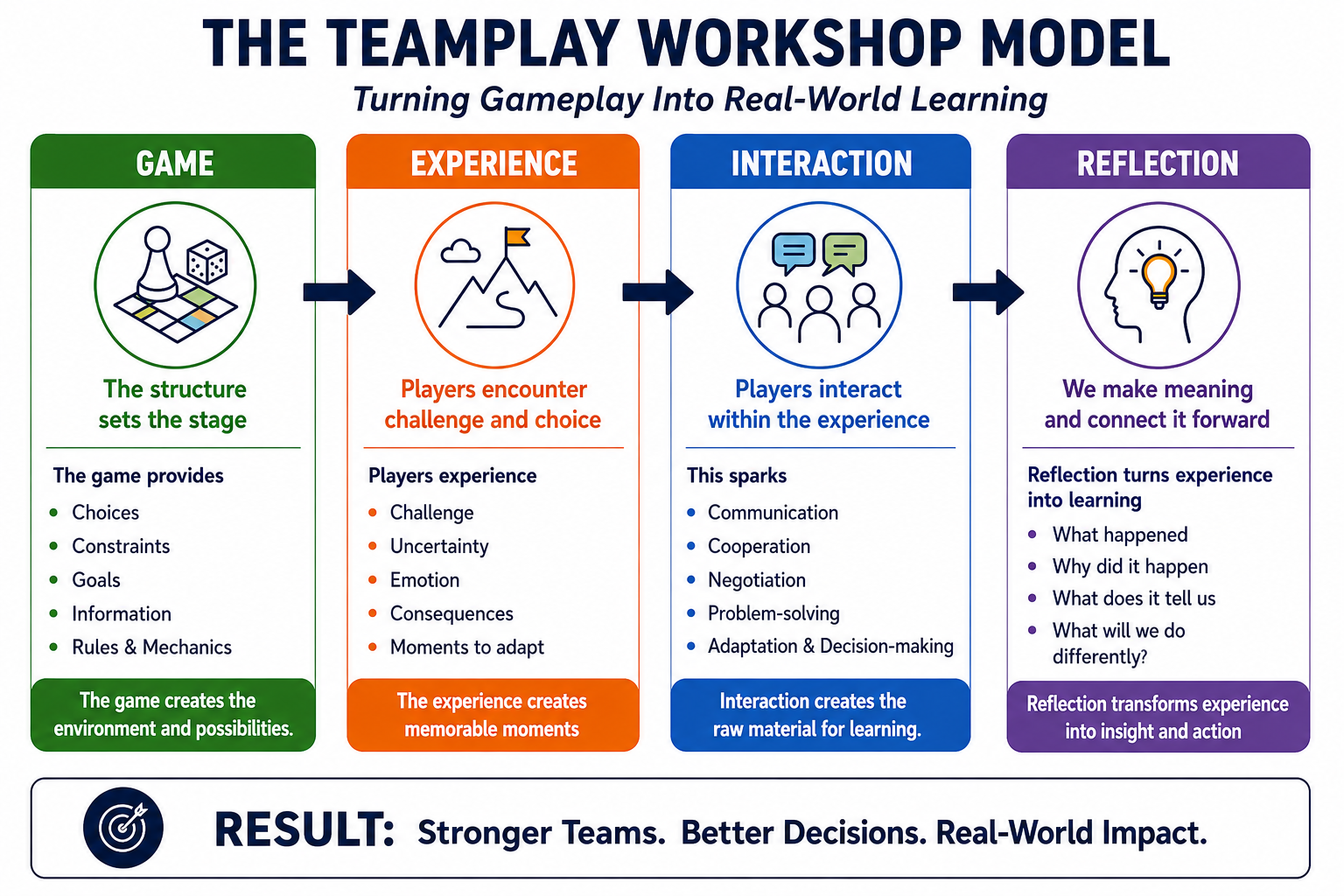
It Isn't About the Games
Imagine walking into your weekly team meeting.
One person immediately takes charge.
Another sees the solution but hesitates to speak.
Someone wants more information before making a decision.
Another pushes the team toward action before everyone is ready.
Sound familiar?
Now imagine this isn't your team meeting. It's your team playing a board game.
New game designs emerged in the late 1990’s and revolutionized the board game industry. Modern games are totally different than games of the past, and have unique story themes, “mechanics”, rules, and structures that guide player interactions. Thousands of new games are released every year creating a $20 billion-dollar industry. Only a few of those games rise to being nominated for an industry award, like the Mensa Award or Spiel des Jahres. Most games can be found on Board Game Geek’s website among thousands of other games, some dating back thousands of years. No matter how far back in time researchers look – they find humans playing games.
Player interactions in games mirror how staff interact in typical team meetings and work projects. Communication patterns emerge. Leadership shifts, either naturally, or through adaptation or conflict. Decisions must be made, often with incomplete information. Disagreements on next steps arise. Trust is tested. Players must adapt to the game conditions and the team’s dynamics. Games have deadlines, resource constraints, and regulatory guardrails, just like organizations.
No behaviors are scripted when playing a game – it’s a completely new experience for the team. Players must navigate interacting with each other while also interacting with the technology of the game - all through the constraints of the game board, cards, dice, and pawns. Every card that is drawn or dice rolled requires a decision. Consequences and feedback from the game are immediate. The team can see the effectiveness of their decisions and make changes as needed. The game becomes a puzzle to be solved, a territory to be explored, a learning space for the team to develop skills as they work together in the game.
The master game facilitator ensures the team is playing in minutes. The team enters the “magic circle” of the game where new behaviors, shifting leadership, and changes to enhance team effectiveness can be safely tried.
Unlike the workplace, the consequences of failing in the game are low. Nobody loses a customer. No quarterly goals are missed. No performance review or bonus is at stake. Players feel safe to experiment, and that's where the learning begins.
Why Games Develop Teams
Most workplace training teaches skills like teamwork. Then you go back to the job and try to remember and practice what you learned. The Ebbinghause Forgetting Curve tells us that 50% of that investment in traditional team development is lost in the first 24 hours.
Board game learning is more “sticky”. Games let teams experience teamwork, reflect on what’s working, experiment with new skills and behaviors, and decide what changes are needed to be a better team back at work. That's a profound difference from traditional classroom training. Game learning has up to 90% learning retention.
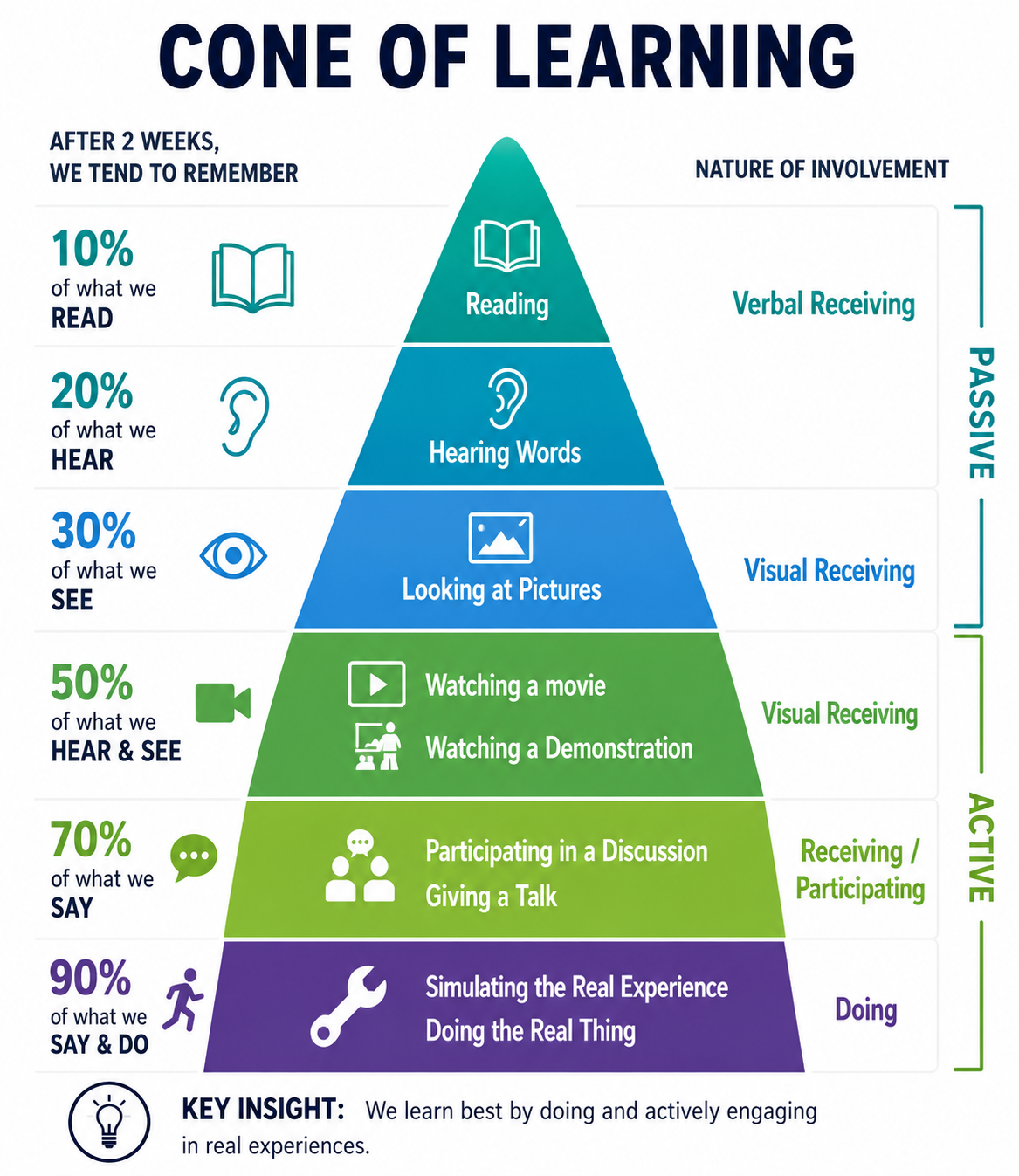
Traditional training asks people to remember information. Research consistently shows that people retain knowledge longer when actively participating in meaningful experiences rather than passively receiving information. David Kolb's work on experiential learning demonstrates that adults learn most effectively through a cycle of concrete experience, reflection, conceptual understanding, and experimentation.
Games require people to understand and use information.
Instead of discussing collaboration, players must collaborate to win.
Instead of hearing about communication styles, they practice communication.
Instead of reading about leadership, leadership emerges naturally.
To play a game, players must:
Share information clearly
Listen to different viewpoints
Solve problems together
Adapt when plans fail
Make decisions with incomplete information
Work well together under pressure
Doesn’t that sound like most days at work?
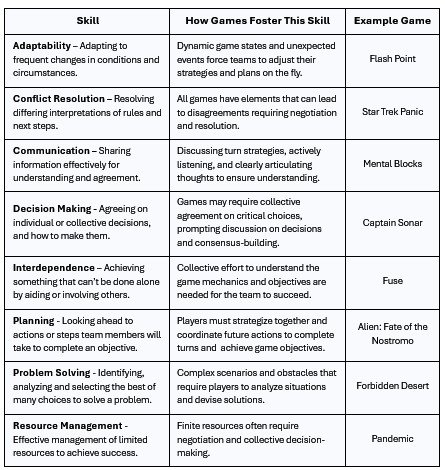
Below are some critical skills that teams practice when playing a game.
Winning The Game Isn't the Lesson
A big misconception about game-based learning is that success means winning the game. It doesn't.
Winning the game is nearly irrelevant. The real objective is understanding how the team attempted to win.
How did the team determine leadership roles?
Who influenced decisions?
Who asked thoughtful questions?
Who shared critical information?
How did the team adapt when the situation changed?
What did you learn that needs to “show up” back in your workplace?
These are the conversations that improve workplace performance—not whether the team scored enough victory points.
The Game Creates the Experience
At the heart of every Teamplay Workshop experience is a game. Yes, it’s just a tool, but the right game can be transformative for teams.
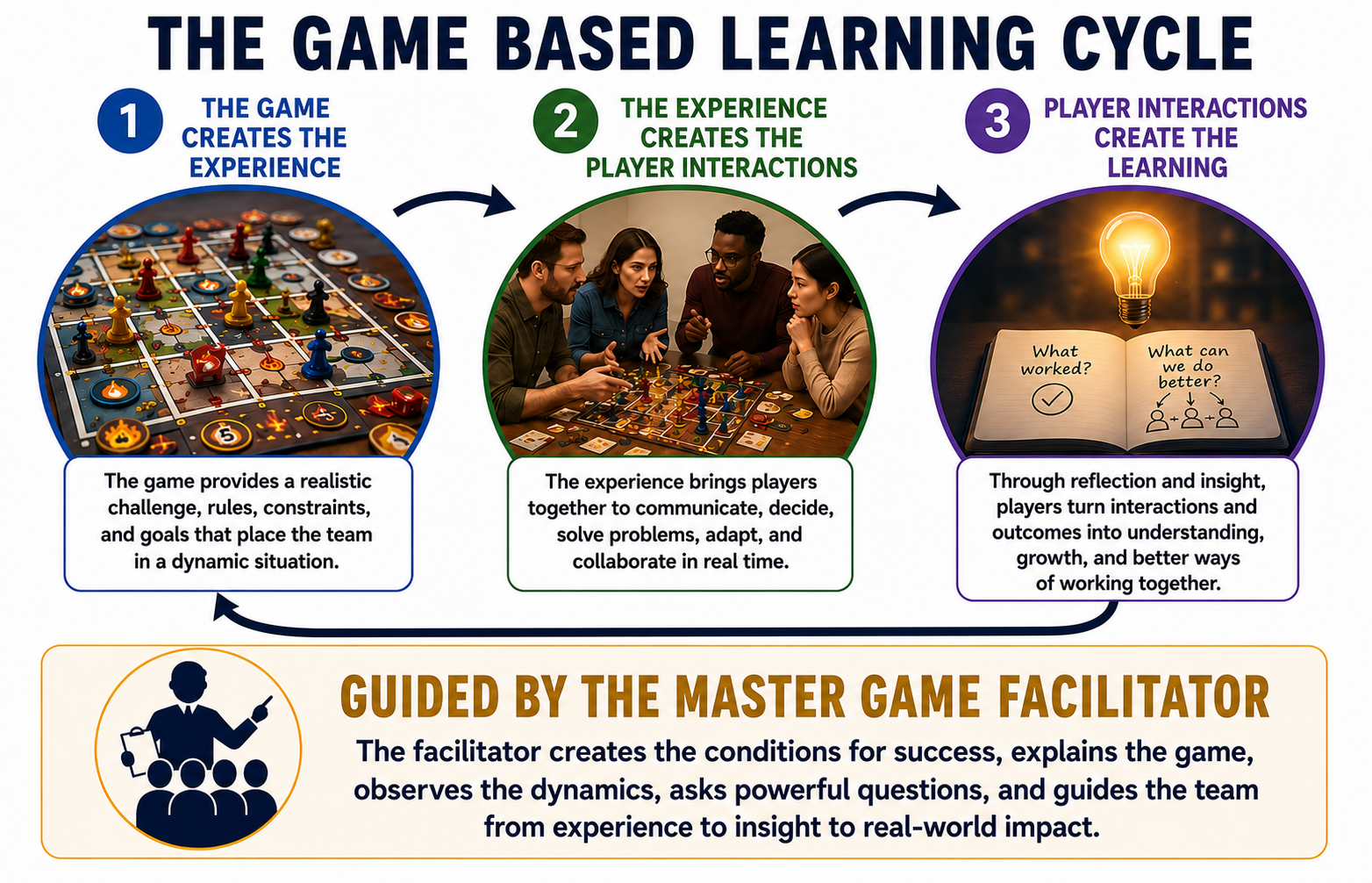
The game creates the experience.
The experience creates the interactions.
The interactions create the learning.
The games’ story, the game board, cards, rules, game mechanics, and victory conditions all create the structure of the game experience.
The master game facilitator links the context of the game to the team’s learning objectives, helps players draw connections between game behaviors and work behaviors and come to conclusions about any behaviors that need to “show up” at work as a result of what the team learns.
The game is simply the laboratory. The players interact within that laboratory in a grand experiment to work better as a team. The results are supported by research.
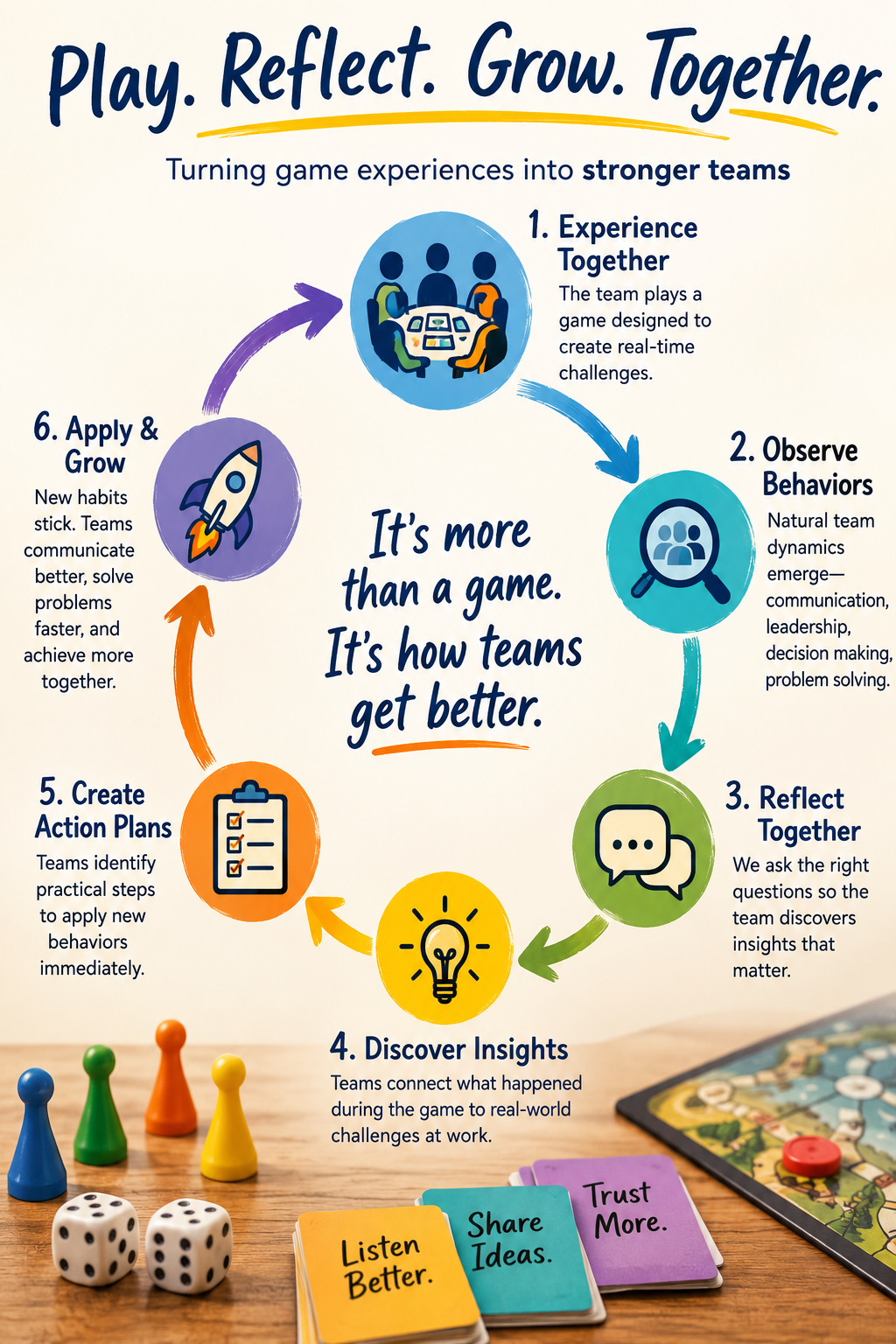
Every Teamplay Workshop follows Kolb's Experiential Learning Cycle:
Players first experience the challenge.
Then they reflect on what happened.
Together they develop new understanding about communication, trust, leadership, or collaboration.
They immediately test those new ideas during the next round.
Finally, they decide what new behaviors and learning needs to transfer back to the workplace.
That rapid cycle of experimentation and feedback is one reason experiential learning creates such lasting behavioral change. The board game becomes more than entertainment. It becomes a safe laboratory for improving how teams think, communicate, and work together.
How a Master Game Facilitator Changes Everything
Anyone can play a board game. Very few people can transform playing a game into an evidence-based learning experience. If simply buying a board game and playing it developed essential workplace competencies, every game night would produce better leaders.
Without the facilitator, players just have fun. And there’s nothing wrong with fun. With facilitation, they gain insights that continue long after the game is packed away.
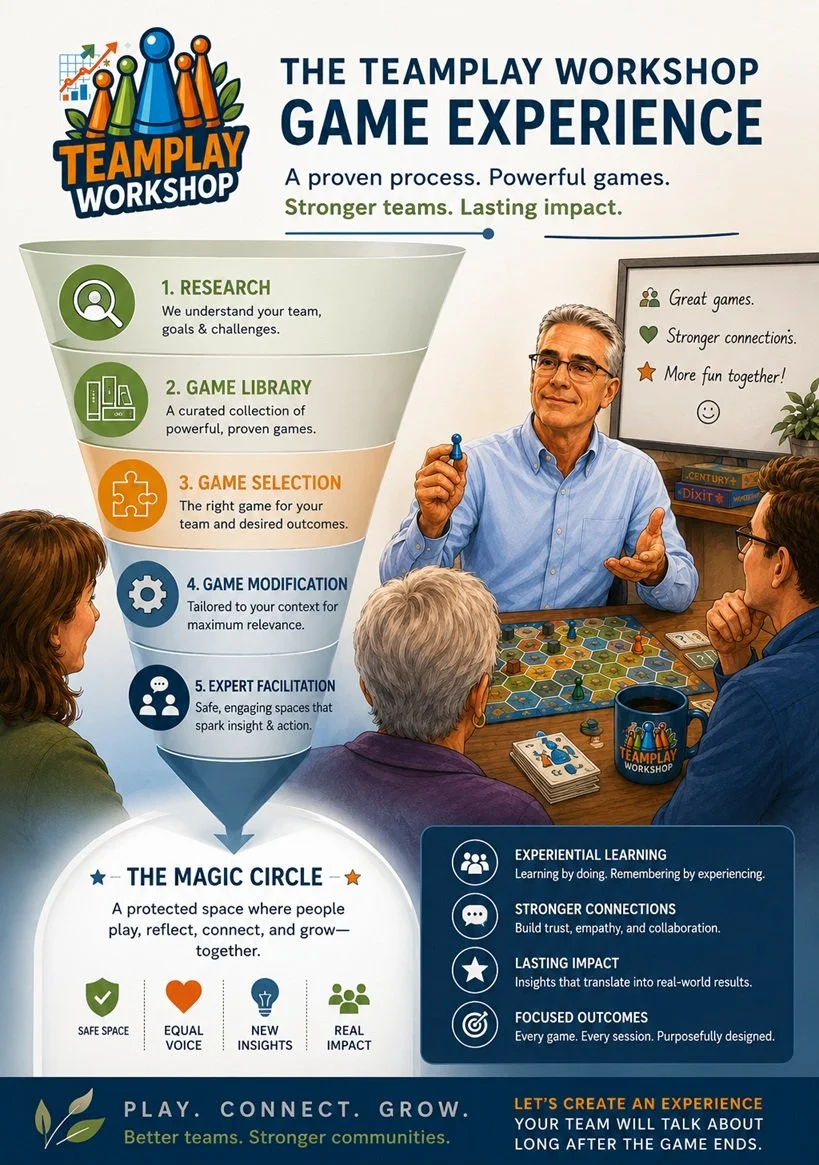
The facilitator helps the team discover how they communicate, make decisions, handle conflict, and support one another under pressure, while having fun.
A Master Game Facilitator knows how to:
• Choose the right game for the team’s size and goals
• Teach the rules of play quickly in a scaffold
• Observe team behaviors as they emerge
• Ask questions that encourage reflection
• Connect game experiences to workplace challenges
• Help the team create action plans they can apply
Experiential learning is so effective that people remember real experiences far longer than passively learning through presentations. Think about the last PowerPoint presentation you saw. Now think about the last memorable learning experience you shared with your team. Which one do you remember best? Which one changed your team’s behavior?
Games compress weeks of workplace interactions into an hour or two.
The decisions are real.
The experiences are unique and genuine.
The collaboration is authentic.
This shared experience is the foundation for meaningful discussion about how the team can be more effective in their work. The master game facilitator is the thread that ties it all together.
Why (the right) Games Matter
Not every board game can deliver meaningful learning. Different games create different team experiences, which is why selecting the right game matters just as much as properly facilitating it.
That's why Teamplay Workshop carefully selects games recognized for exceptional design. These games aren't chosen because they're popular. They're chosen because they consistently create game environments that produce specific interactions among players. Some games require teams to share fragmented information. Others will reward careful planning and punish shortsighted decisions. Some game decisions force difficult trade-offs. Others require trust under the pressure of speed or scant resources.
Different game mechanics create different conversations. Different conversations create different learning. Knowing which game to play and how to facilitate it is the domain of the master game facilitator.
Many people think of board games as a competition. We learned that by playing Monopoly, Checkers, Chess, and The Game of Life.
Cooperative games are different. Instead of trying to defeat each other, everyone works toward a common goal. The game itself becomes a challenge to overcome.
That simple shift to cooperation changes everything. Instead of creating winners and losers, cooperative games encourage:
• Shared ownership
• Trust & open communication
• Collective problem solving
• Psychological safety
• Mutual support
The question changes from “Can I win?” to “How can we win together?” This is exactly the thinking that high-performing organizations want for their teams every day.
Yes, teams laugh when playing a game. They celebrate. And they occasionally make spectacular mistakes. Beneath the fun, something important is happening:
• Players are practicing leadership.
• They’re learning to communicate more effectively.
• They’re discovering how they react under pressure.
• They see the strengths their teammates bring to the table.
• Most importantly, they’re building trust through shared experience.
Research tells us these experiences strengthen team skills, engagement, problem solving, and overall team cohesion.
The Teamplay Workshop Difference
At Teamplay Workshop, games are never the central focus. They are an important learning tool.
We don’t play games just because they’re fun. We use carefully selected and customized games because they create specific interactions and conversations. It’s fun with purpose.
Every workshop begins by scoping clear team development objectives. Every game is selected by the master game facilitator to help achieve those objectives. Every turn is observed with intention. Every debrief connects what happened around the table to challenges your team faces every day, and what they need to do to overcome future challenges.
The result is an engaging, research-informed learning experience that strengthens communication, trust, collaboration, leadership, and problem solving— all happening while the players are having fun.
Final Thoughts
The game is not a lesson. It’s a laboratory.
The game rules and mechanics create meaningful immersive team challenges.
The facilitator selects the games based on objectives, and guides learning through reflection. The players create the learning.
When the game ends, the board is packed away.
The conversations continue.
The insights remain.
The team grows stronger.
Because in the end, Teamplay Workshop isn't about creating better game players. It's about building better teams.
References
• Kolb, D. A. (1984). Experiential Learning: Experience as the Source of Learning and Development.
• Huizinga, J. (1938). Homo Ludens: A Study of the Play-Element in Culture.
• Edmondson, A. C. (1999). Psychological Safety and Learning Behavior in Work Teams. Administrative Science Quarterly.
• Pentland, A. (2012). The New Science of Building Great Teams. Harvard Business Review.
• Crookall, D. Multiple articles on simulation and experiential learning published in Simulation & Gaming.
